Open source · Apache-2.0 · Built on Pydantic AI
Agents you can run in production.
Firefly Agentic is the production-grade metaframework built on Pydantic AI.
Keep its Agent, Tool and RunContext — gain
lifecycle hooks, delegation, memory, reasoning patterns, validation loops, RAG
and DAG pipelines. Protocol-driven, swappable, no lock-in.
$
curl -fsSL https://raw.githubusercontent.com/fireflyframework/fireflyframework-agentic/main/install.sh | bash
Built on Pydantic AI
28 protocols
6 reasoning patterns
8 embedding providers
6 vector stores
Python 3.13+
type-checked
Apache-2.0
Why a metaframework
Keep the engine.
Keep the engine.
Gain the architecture.
Pydantic AI gives you type-safe, model-agnostic agents. A production system needs more: orchestration, validation-and-retry, memory across turns, traces and budgets, experiments. Firefly Agentic supplies every one of those as a dedicated, swappable layer — so your business logic never couples to infrastructure.
- Your Agent, Tool and RunContext APIs stay exactly as they are.
- Lifecycle hooks, registries, delegation, memory, reasoning, validation and pipelines wrap them — all optional, all composable.
- Switch models, swap a memory backend or replace a component without touching agent code. No vendor lock-in.
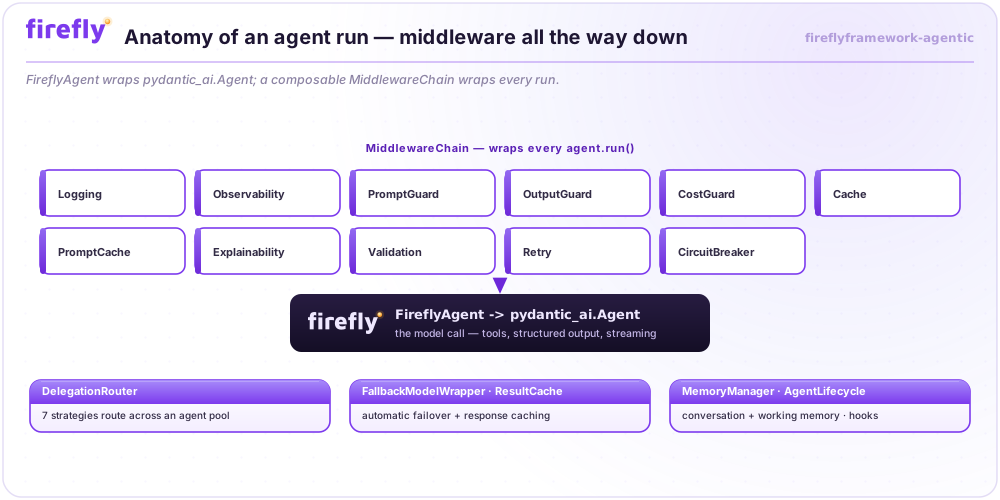
One framework, every concern
Everything a production agent needs
Twelve composable layers. Adopt one, or all of them.
Agents
FireflyAgent, registry, a 10-stage middleware chain, and seven delegation strategies.
Tools
Protocol or base-class tools, guards, composition, and human-in-the-loop approval.
Reasoning
ReAct, CoT, Plan-and-Execute, Reflexion, Tree of Thoughts, Goal Decomposition.
Memory
Conversation history and working memory with token budgets and pluggable stores.
Validation & QoS
Parse-then-validate retries, LLM-as-judge rubrics, hallucination guards.
Pipelines
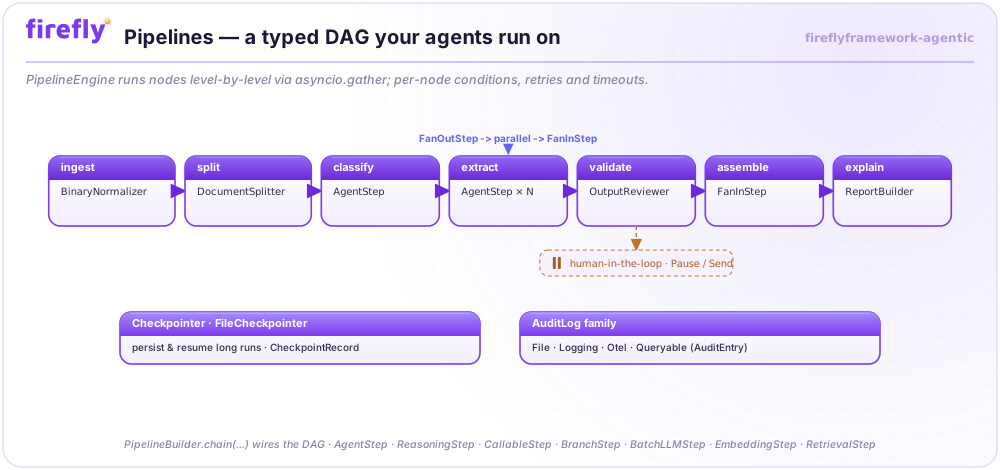
Typed DAGs with parallel execution, retries, checkpointing and audit logs.
Workflows
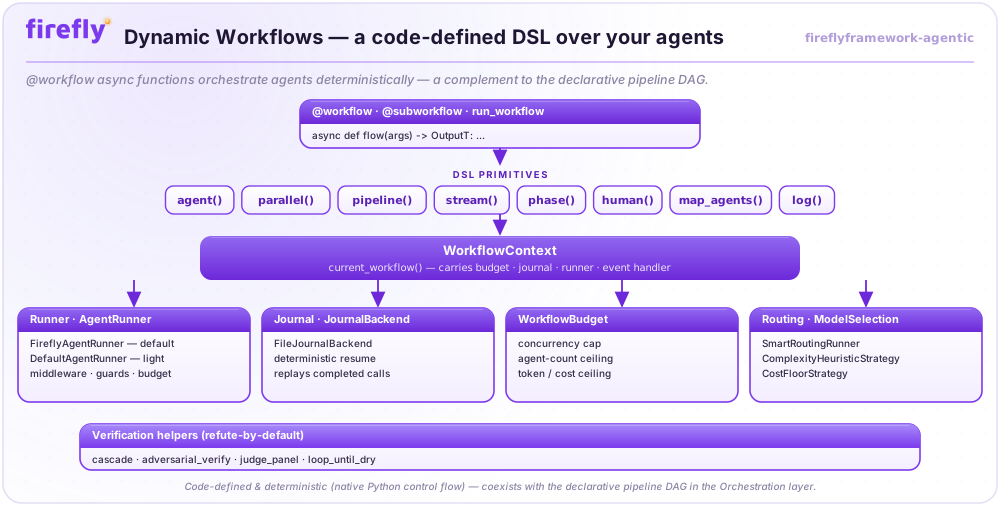
A code-defined orchestration DSL over agents with budgets and deterministic resume.
RAG
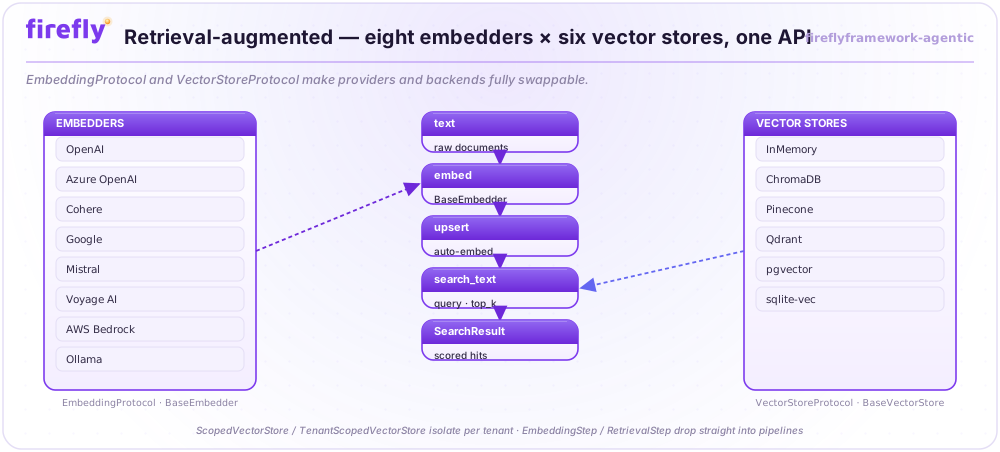
Eight embedding providers, six vector stores, auto-embedding and tenant scoping.
Observability
Native OpenTelemetry spans & metrics, cost resolution, and budget gates.
Security
Prompt-injection guards, PII/secret redaction, and at-rest encryption.
Explainability
Decision records, audit trails and human-readable reports for compliance.
Resilience
A circuit breaker that short-circuits a failing model before it drains budget.
Architecture
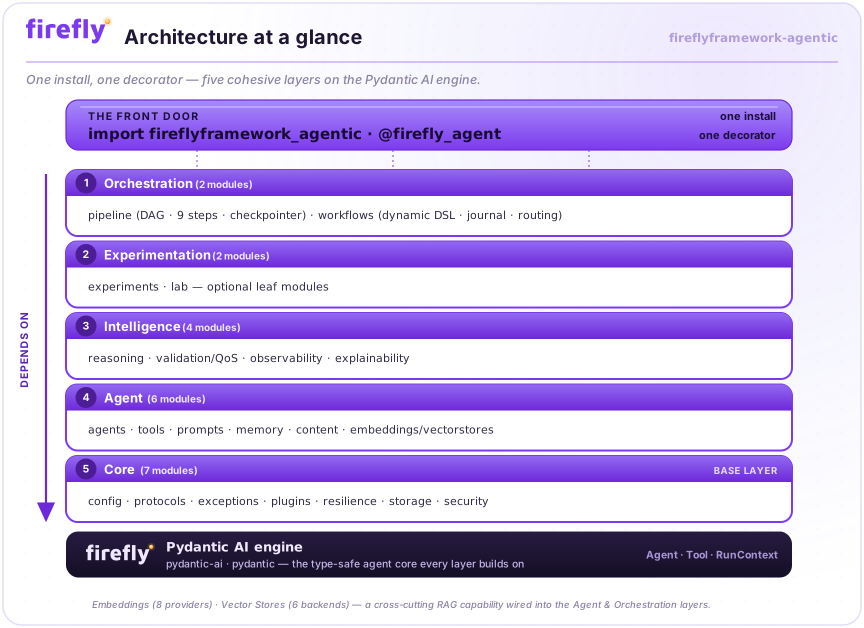
Five layers, strict top-down flow
Core → Agent → Intelligence → Experimentation → Orchestration. Higher layers depend on lower ones, never the reverse.
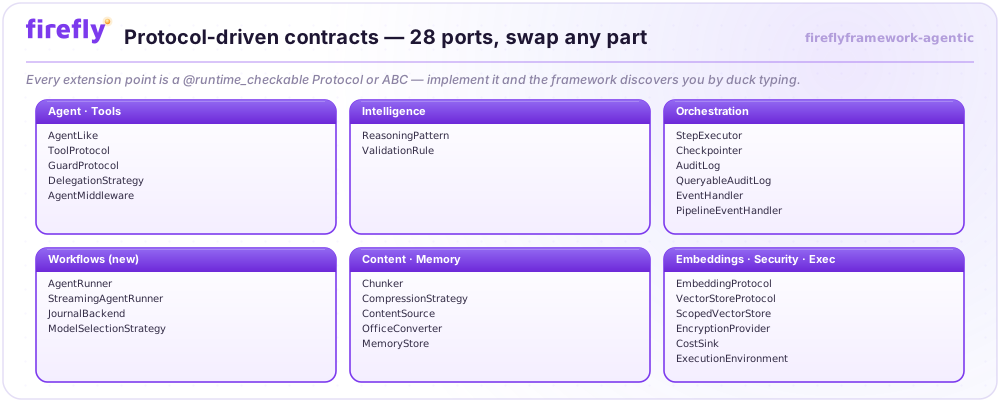
Every extension point is a @runtime_checkable protocol — implement it and the framework discovers your component by duck typing.
Five minutes in
Familiar Python, all the way down
Async-first, typed, and decorator-friendly. Here's the shape of it.
from fireflyframework_agentic.agents import FireflyAgent

agent = FireflyAgent(name="assistant", model="openai:gpt-4o")
result = await agent.run("Summarize this contract in 3 bullets.")
print(result.output)
from fireflyframework_agentic.memory import MemoryManager

memory = MemoryManager(max_conversation_tokens=32_000)
agent = FireflyAgent(name="bot", model="openai:gpt-4o", memory=memory)

cid = memory.new_conversation()
await agent.run("My name is Alice.", conversation_id=cid)
await agent.run("What's my name?", conversation_id=cid)  # -> Alice
from fireflyframework_agentic.reasoning import ReActPattern

react = ReActPattern(max_steps=5)
result = await react.execute(agent, "What's the weather in London?")
print(result.output)  # structured ReasoningResult + trace
from fireflyframework_agentic.pipeline.builder import PipelineBuilder
from fireflyframework_agentic.pipeline.steps import AgentStep, CallableStep

pipeline = (
    PipelineBuilder("idp")
    .add_node("classify", AgentStep(classifier))
    .add_node("extract", AgentStep(extractor))
    .add_node("validate", CallableStep(check))
    .chain("classify", "extract", "validate")
    .build()
)
result = await pipeline.run(inputs="Process this document")
Intelligence layer
Six reasoning patterns, one loop
Every pattern shares a reason → act → observe → continue template, produces a structured trace, and swaps its output mode per model.
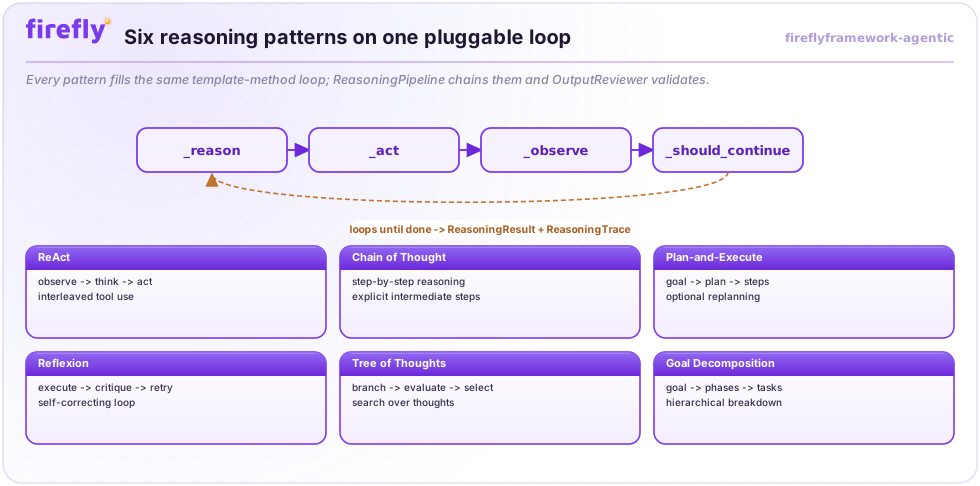
› ReAct
› Chain of Thought
› Plan-and-Execute
› Reflexion
› Tree of Thoughts
› Goal Decomposition
Orchestration layer
Declarative DAGs & code-defined workflows
A typed pipeline graph for structure; a Python DSL for deterministic, resumable orchestration. Use either, or both.
Retrieval-augmented generation
Bring your own embeddings & vector store
Eight embedding providers and six vector-store backends behind one protocol — drop straight into a pipeline with EmbeddingStep and RetrievalStep.
Learn the framework
From zero to a working IDP pipeline
The Bible
The Complete Tutorial
18 hands-on chapters that teach every concept from zero to expert through a real document-processing pipeline.
Start the tutorial → Use caseIDP Pipeline
A focused walkthrough of a seven-phase pipeline: ingest, split, classify, extract, validate, assemble, explain.
Read the walkthrough → ReferenceModule Reference
Detailed guides for every module — agents, tools, reasoning, pipelines, observability and more.
Browse the docs →