Security policy
Firefly Weave is an alpha project. The capability matrix describes current verification and limitations. No supported stable-release or security-response SLA is announced by this source tree.
Reporting a concern
Do not post credentials, private data or exploit details in a public issue. Use GitHub private vulnerability reporting to send a report privately to the repository maintainers. The package author address is not a designated security response mailbox.
Prepare a minimal, redacted report with the affected source/package version, the component (API, native executor, worker, CLI, Studio host, desktop app, or Studio page), configuration and trust boundary, reproduction steps against an owned fixture, expected/observed behavior and impact. Use synthetic values and redact tokens, connection strings, provider payloads, user data and local secret paths.
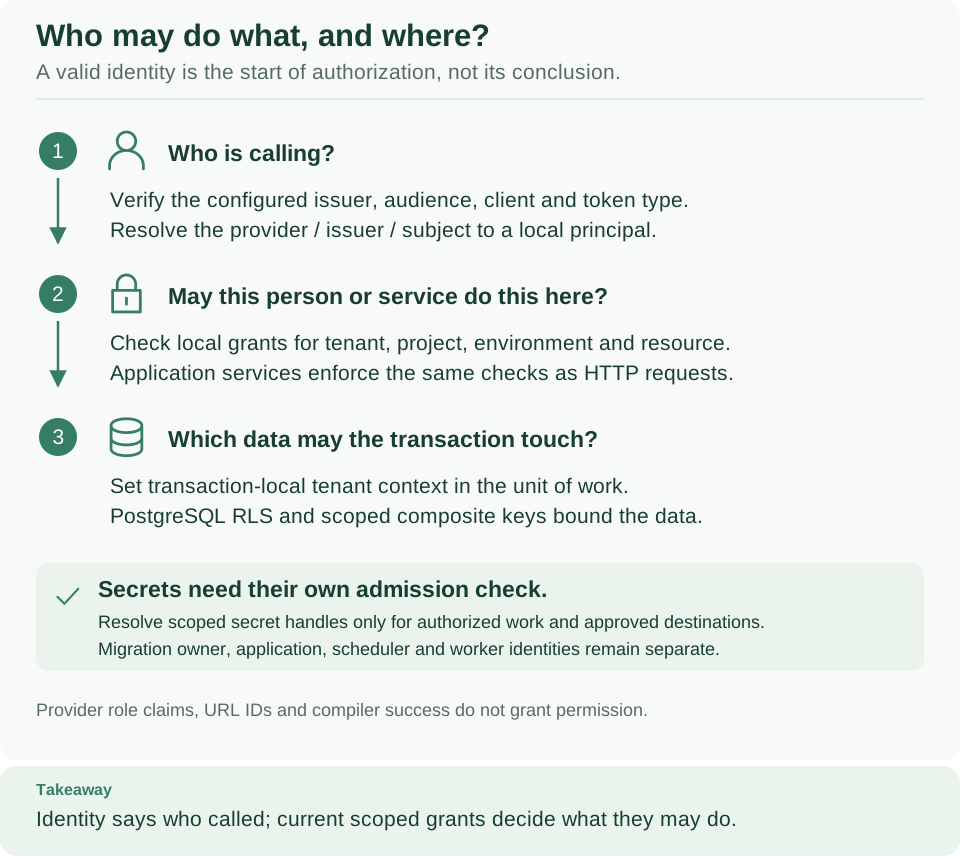
How to read this diagram: Each numbered question must pass before the next one is asked. Use them to name the boundary your report affects: a verified token, a local permission, and a connector secret serve different roles.
Deployment boundaries
Use verified identity links and local scoped grants, separate migration/app/worker credentials, explicit secret references, TLS and allowed-destination policies. Never place secrets in workflow literals or ordinary outputs. Tenant RLS is one layer alongside service authorization, not a replacement for it. Live-provider, production restore/upgrade and operational guarantees require their own evidence. See identity and secrets and configuration.
On people's computers, the CLI, Studio, and the desktop app keep tokens in the
operating system's credential store or in a private file the person chooses,
never in the saved platforms file or the Studio browser page. In the current
source, planned for the next release, the public
GET /api/v1/client-configuration endpoint publishes sign-in settings only; its
contract cannot carry a client secret, token, or verifier configuration. See
what is saved, and where.